i.
Samyak Darśana Right Perception
To see existence as it actually is — without the colored lens of fear, desire, or borrowed opinion. The first jewel, because it makes every other discipline possible.
The teachings carried forward by Munisuvrata Bhagwan are not relics of doctrine — they are operational instructions for any human who wishes to live with clarity, restraint, and grace.
Across his teaching, Munisuvrata Bhagwan returned again and again to a single insight: the soul is innately luminous; what dims it are the karmic accumulations born of attachment, aversion, and inattention. The remedy is neither belief nor ritual — it is conscious living.
What follows is an articulation of those instructions in seven interlocking facets, each a doorway into the same inner room.
To wound nothing — not in act, not in word, not in thought. The root of every deeper virtue, and the most rigorous discipline a human can choose.
Truth is not blunt accuracy — it is speech that aligns with reality, kindness, and consequence. To speak truthfully is to honor the listener as much as the fact.
Not poverty, not denial — but freedom from the tyranny of possession, opinion, and identity. The lightness that arises when nothing must be defended.
Mind is the most powerful instrument a human possesses — and the most undisciplined. To master it is to gain a quiet authority no external power can touch.
The senses are doorways. Left ungoverned they pull the soul outward; consciously regulated they become instruments of clarity rather than distraction.
Every act, intentional or not, leaves a subtle imprint. To live consciously is to slowly dissolve those imprints — until the soul reflects existence without distortion.
Awakening is not a thunderclap; it is a long, patient brightening. The slow recognition that consciousness has always been its own light, requiring no external sun.
Compassion in Jain thought is wider than sentiment — it is a structural recognition that every soul, however small, walks the same road home.
The most underrated freedom. Restraint is the architecture inside which a fully alive human life becomes possible — focused, sovereign, and unhurried.
All Jain teaching converges on three luminous pivots — right perception, right knowledge, right conduct. Together they form the crown a soul wears as it walks toward liberation.
To see existence as it actually is — without the colored lens of fear, desire, or borrowed opinion. The first jewel, because it makes every other discipline possible.
Knowledge tested in the laboratory of one's own life. Not what is memorized, but what has been integrated — the wisdom that does not waver under pressure.
The visible architecture of inner clarity. Action that arises naturally from perception and knowledge — neither forced nor performed, simply true.
Restraint is not the absence of life — it is the architecture inside which life becomes alive.
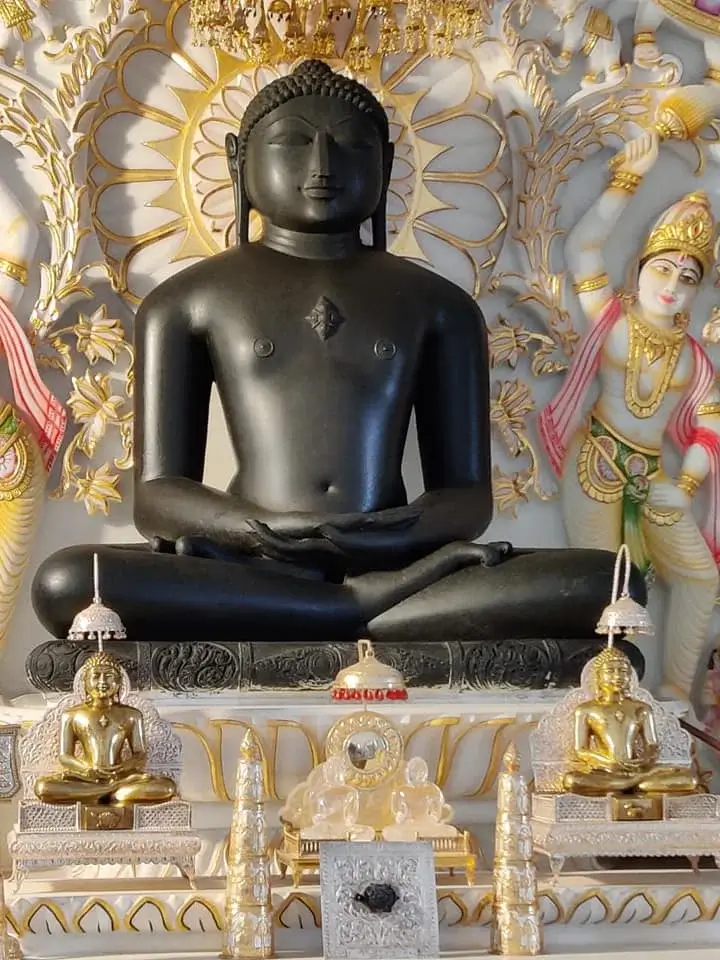
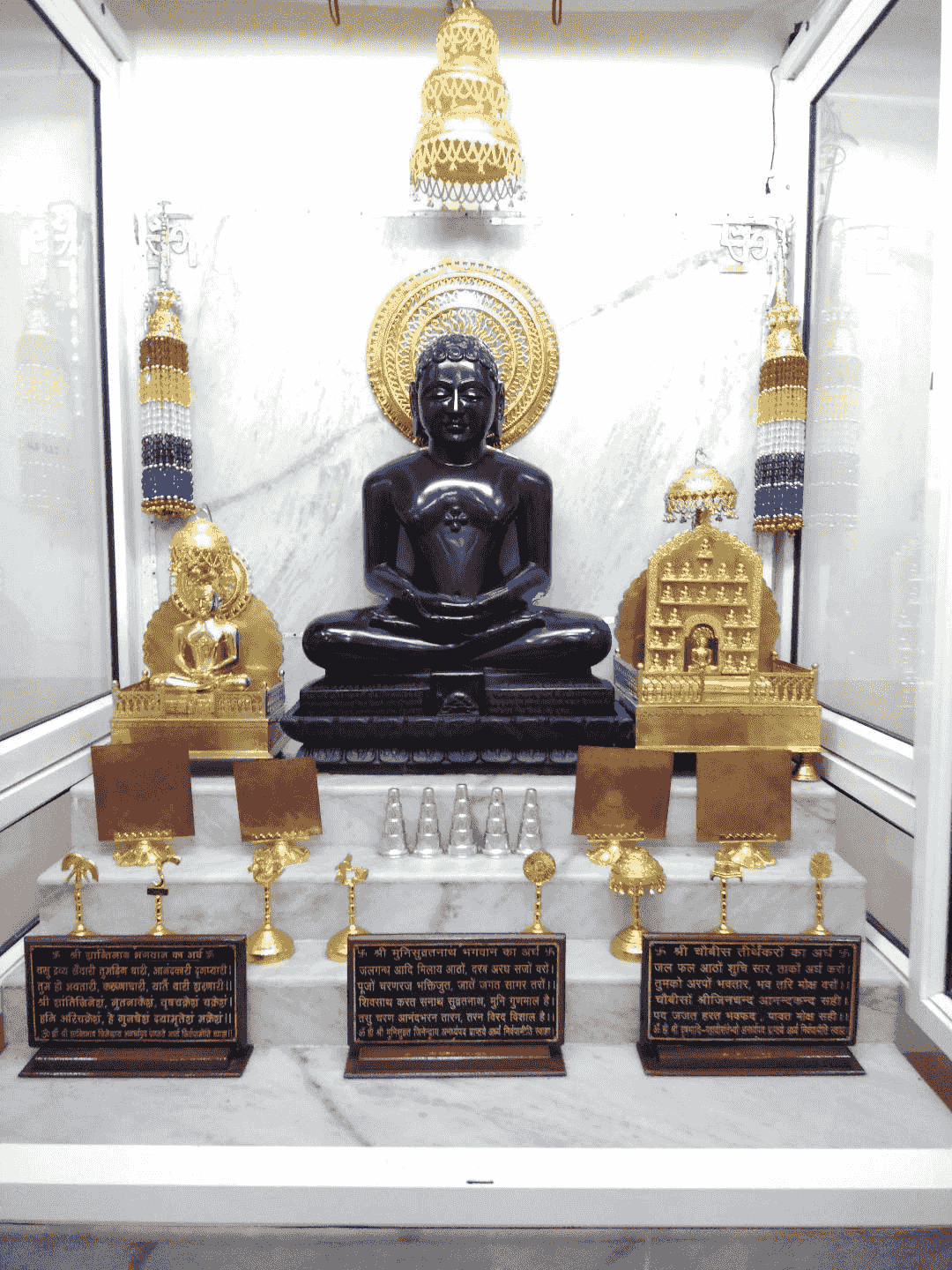
From philosophy into form — explore the visual language of the tradition: the tortoise lañchana, the postures of the idol, the colors and the geometries of the sacred.