Biography · The Life of a Tīrthaṅkara

The silent prince who became a liberated soul.

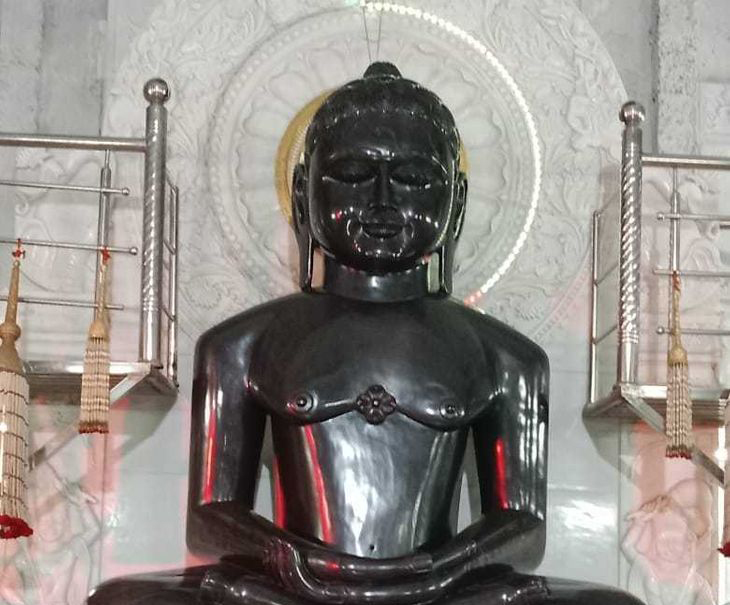
Born into royalty, sovereign of his own senses, and finally free of every karmic atom — the life of Munisuvrata Bhagwan is the story of a discipline that walked all the way home.
A Royal Beginning

Of dynasty, of dharma.

Jain tradition places Munisuvrata Bhagwan in the lineage of Hari kings of Rajagriha. His father, King Sumitra, and mother, Queen Padmavati, raised him within the gilded confines of the palace — yet the young prince carried within him an unmistakable interiority. Royal life adorned him; it never owned him.

"He wore the crown like a passing cloud, and the kingdom like an inheritance held in trust."
Sacred portrait of Munisuvrata Bhagwan in serene meditative posture
The Meaning of the Name

Muni — the silent. Suvrata — the perfectly vowed.

The name Munisuvrata is itself a teaching. Muni evokes the sage whose tongue has been disciplined into silence; Suvrata evokes the soul whose every vow is observed without compromise. To say his name is to remember that liberation is not granted — it is practiced, breath by breath, vow by vow.

He is also addressed as Munisuvratanatha — the protector-master of all who walk the path of vows.

The Inner Journey

From the gilded palace to the boundless within.

Six luminous stages mark the arc of every Tīrthaṅkara's life. Munisuvrata Bhagwan walked each — not as ritual, but as the natural deepening of an awakened intent.

Stage I · Garbha Kalyāṇaka

Conception

Queen Padmavati witnessed the auspicious sixteen dreams that herald the descent of a Tīrthaṅkara. Even before his birth, the realm sensed that a soul of immeasurable purity had chosen to take form.

Stage II · Janma Kalyāṇaka

Birth into Royalty

Born to King Sumitra of Rajagriha. The infant carried the lañchana of the tortoise — a sign of patience, fortitude, and protective strength. The celestial beings descended to perform the sacred Meru abhisheka.

Stage III · Dīkṣā Kalyāṇaka

The Great Renunciation

Surrounded by sovereignty, he chose the forest. Robes were exchanged for the open sky; the throne was traded for the earth. The vow — pañca-mahāvrata — was taken in absolute silence.

Stage IV · Tapas — Austerities

Eleven Months of Inner Fire

Standing motionless beneath the seasons, he burned away the obscuring karmas. No food, no shelter, no resistance — only the ceaseless witnessing of consciousness watching itself.

Stage V · Kevala-Jñāna Kalyāṇaka

Omniscience Attained

Beneath the Champaka tree, the four destructive karmas dissolved. He became Sarvajña — the all-knower. The Samavasaraṇa rose around him, where humans, beings, and devas listened in a single shared silence. His chief Gaṇadhara, Sage Malli Svāmi, became the first vessel of his teaching.

Stage VI · Mokṣa Kalyāṇaka

Liberation — Siddhahood

At Sammed Shikharji, every remaining karmic particle was shed. The soul ascended to the Siddhaśilā, where it now resides as pure consciousness — beyond birth, beyond death, beyond the very arc of time.

Sacred Attributes

A life recorded in living measure.

BirthplaceRajagriha
Father · MotherKing Sumitra · Queen Padmavati
LañchanaTortoise (Kūrma)
Mokṣa-bhūmiSammed Shikharji
Lifespan30,000 + years
Body ComplexionDark Sapphire
Chief GaṇadharaSage Malli Svāmi
EraAvasarpini · Period of Jain Rāmāyaṇa
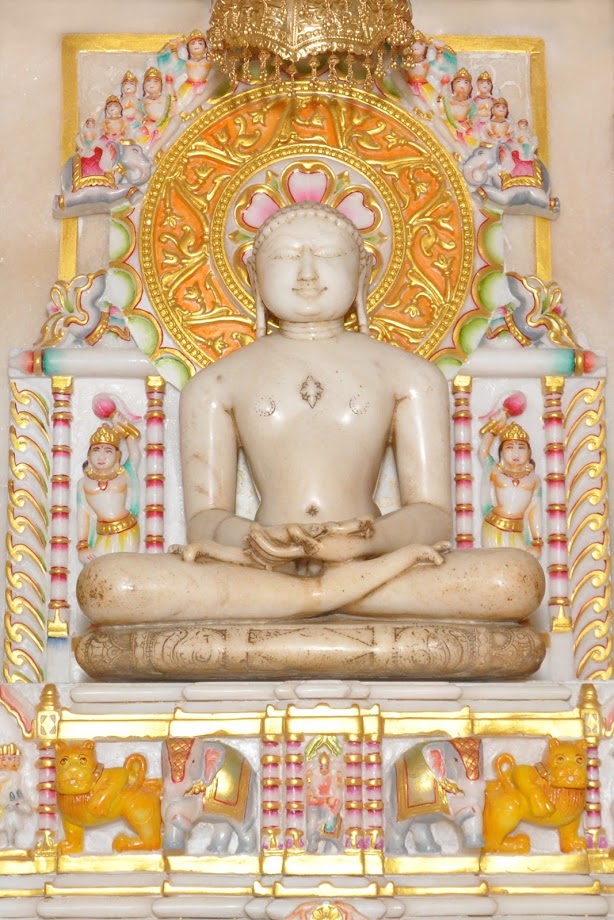
Devotional depiction of Munisuvrata Bhagwan within Jain cosmology
A Place in Jain Cosmology

Twentieth in an unbroken garland of light.

Jain cosmology describes vast cycles — Avasarpini (descending) and Utsarpini (ascending) — through which twenty-four Tīrthaṅkaras emerge in each half-cycle to forge a tīrtha, a bridge across the ocean of saṃsāra.

Munisuvrata Bhagwan stands as the twentieth in the present Avasarpini. His position is profound: by the time he appeared, the spiritual climate had thickened and worldly desires were on the rise. His vow was therefore especially radical — a complete withdrawal from the heaviness of an age slowly forgetting itself.

Explore the Symbolism
"

A vow is not a chain. It is the unbroken thread by which the soul climbs back to itself.

— Reflection on the path of Suvrata