Ahimsa
Non-violence. To injure no being — by hand, by word, by thought. The first vow, the foundation of every other virtue, and the most quietly radical practice in the world.
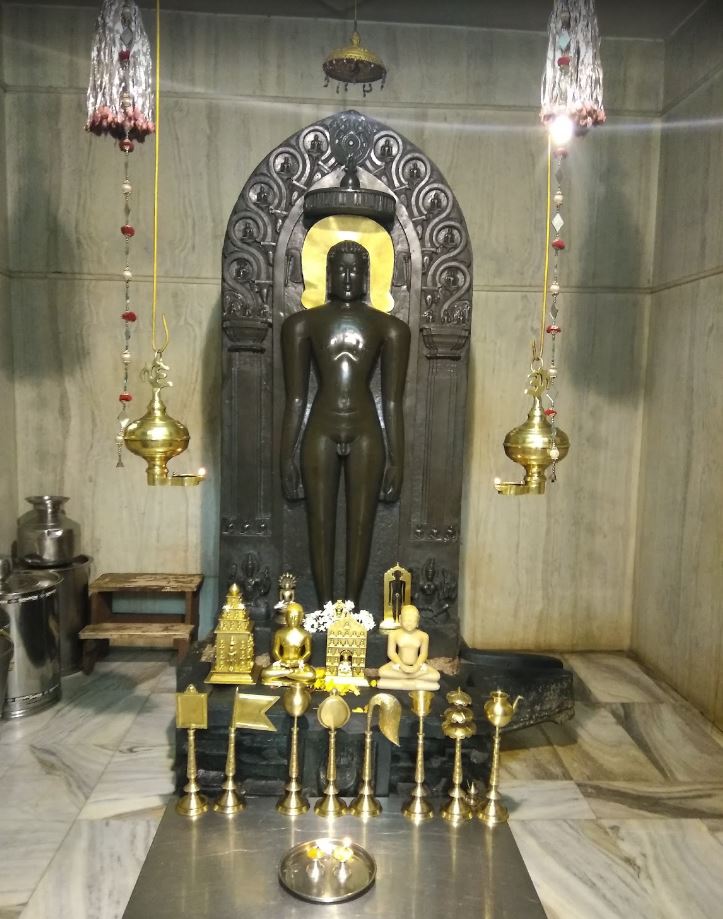
Six luminous principles that turn ordinary life into the practice of awakening — preserved exactly as Anantnath Bhagwan illumined them.
Each teaching is both a vow and a doorway — a way of being that gradually dissolves the karmic film clouding the soul, until what remains is pure consciousness.
Non-violence. To injure no being — by hand, by word, by thought. The first vow, the foundation of every other virtue, and the most quietly radical practice in the world.
Truth. To speak only what is true and what is kind. Truth that wounds is a half-truth; only the truth that protects is whole.
Non-attachment. To possess without being possessed. Wealth, status, even ideas — held lightly, released easily.
Mukti from karmic bondage. Every action seeds a karmic particle; awareness, equanimity and right conduct are the long, patient erasers.
Saṃyama. Disciplined senses, disciplined thought, disciplined hand. Not denial — but a fierce caretaking of the inner life.
Śānti. The quiet that settles when craving and aversion both have grown still. The natural state — not an achievement but a remembering.

In the Jain understanding, every soul — from the one within the smallest insect to the one within the most evolved being — is equally infinite in its potential. Ahimsa is not a rule, it is the lived recognition of this fact.
To eat with awareness, to walk with awareness, to speak and listen with care — this is the daily form of Ahimsa. Anantnath Bhagwan showed that even the breath, taken with mindfulness, can become a prayer.
The soul is its own friend, and the soul is its own enemy. He who has conquered himself is a friend to all.— On self-discipline
Beneath the six principles lies a more compact summary — the path that every Tirthankara, including Anantnath Bhagwan, has taught.
To see reality as it is — without the distortions of preference, prejudice or projection. The eye opens to the true nature of the soul.
Knowing is more than information. It is the inner certainty that arises when right faith deepens into direct understanding.
What is seen and known must finally be lived. Right conduct is the daily, hourly, momentary expression of inner clarity.
Jain philosophy maps the soul's bondage with extraordinary precision. There are eight kinds of karmic matter that veil the soul — four ghāti (destructive) and four aghāti (non-destructive).
Anantnath Bhagwan, in his moment of Keval Gyan, dissolved the four ghāti karmas — and at his nirvāṇa, the remaining four. Liberation, in this map, is not a metaphor. It is a literal undoing of the substances that bind.
