Lanchhan — Falcon
The cognizance of Anantnath. A falcon is swift, clear-sighted, single-minded — a soul that moves directly toward liberation without distraction.

Every line of a Tirthankara's iconography is a teaching in itself — the lanchhan, the posture, the colour, the attendant beings.
Each Tirthankara is recognised by a unique lanchhan carved at the base of the throne. For Anantnath Bhagwan, this emblem is the Falcon (Śyena) — a bird of decisive flight, of clarity, of singular focus on the absolute.
Within some regional and lineage traditions, the Porcupine is also recorded as his cognizance — a creature whose protective armament is read as the soul protected by the right vows. Both are honoured, and both speak of an inner courage that does not waver.
The symbol is never decoration. It is the doorway — the first thing a devotee sees, and the first teaching offered.

Beyond the lanchhan, every detail of a Tirthankara idol — the tree, the umbrella, the throne, the attendants — carries layered meaning.
The cognizance of Anantnath. A falcon is swift, clear-sighted, single-minded — a soul that moves directly toward liberation without distraction.
The tree under which he attained Keval Gyan. The Aśoka — meaning "without sorrow" — represents the ground of awakening: a place where suffering ends.
The three royal umbrellas above his head signify dominion over the three worlds — heaven, earth and the netherworlds — recognising him as a sovereign of the spirit.
The luminous disc behind his head — light that pours outward from a soul that has shed every shadow of karma.
His male attendant deity — guardian of the path, depicted with reverence at one side of the divine assembly.
His female attendant deity — bearer of the elephant goad (aṅkuśa), a symbol of skilful guidance toward the right path.
Tirthankara idols are sculpted in only two postures — both expressing the absolute calm of a liberated soul.
Seated, legs folded, palms resting in the lap — the posture of inward meditation. The body becomes a still mountain. The breath becomes a quiet stream. Many idols of Anantnath Bhagwan are sculpted in this posture.
Standing erect, arms held slightly away from the body, eyes lowered — the posture of complete renunciation of the body itself. The soul stands as if free already, the form merely a remembrance.
Idols of Anantnath Bhagwan are most often sculpted in golden hues. The broader Jain tradition uses five symbolic colours, each pointing to an inner quality.
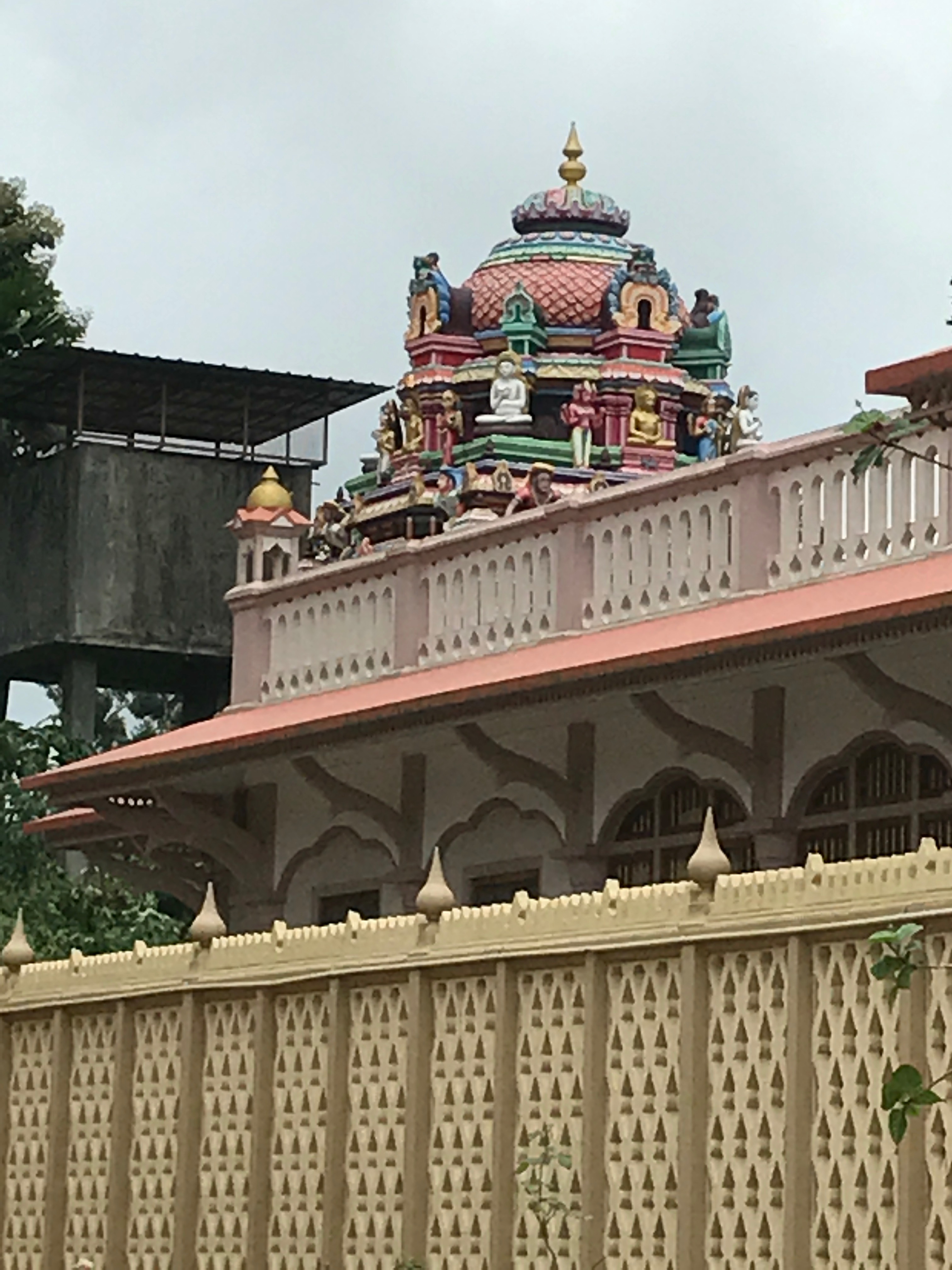
The temple is not a building. It is the diagram of a soul that has been freed.— On Jain temple symbolism