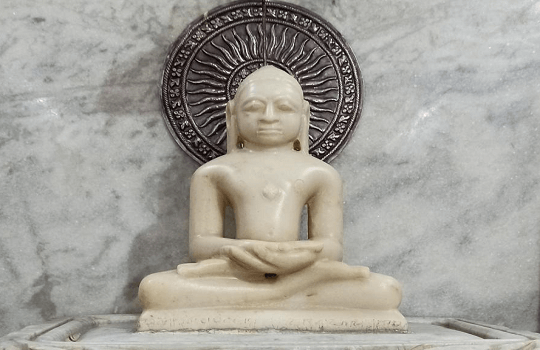
Ahimsā
Non-violence as the supreme dharma — in thought, in speech, in action; toward all beings, including the one within.
The luminous gospel of Shitalanatha Bhagwan rests upon a deceptively simple architecture: live gently, see clearly, hold lightly, return often to the soul. Below are the seven pillars of his eternal counsel.
Where the mind is cool, the soul is free. Where the soul is free, the universe rejoices.— A Teaching of Shitalanatha Bhagwan
Each pillar is a doorway. Each doorway leads, in its own quiet way, to the same chamber of inner stillness from which liberation arises.
Non-violence as the supreme dharma — in thought, in speech, in action; toward all beings, including the one within.
To speak only what is true, kind and beneficial. Truth is the soul’s own voice; falseness is karma in the making. Shitalanatha taught that even an unkind truth must yield to a deeper truth — that of compassion.
Mastery over the senses is not their suppression, but their orchestration. The disciplined seeker is a temple of contained light.
The signature teaching: a coolness within, untroubled by joy or sorrow. From this temperature alone do clarity and right action arise.
To enjoy without grasping, to release without bitterness, to participate fully while remaining unentangled. Detachment is the great art of living.
Compassion that flows ceaselessly, unconditionally, equally — the dharma of the awakened heart.
The triple jewel of Jainism — Samyak Darśana (right faith), Samyak Jñāna (right knowledge) and Samyak Cāritra (right conduct) — together form the path Shitalanatha walked and offered to all souls. Liberation is not a place to reach; it is the soul’s natural state, uncovered when karma is laid down.
Right Faith, Right Knowledge and Right Conduct — together they form a single luminous path. Apart, none alone suffices.
The soul’s clear-eyed reverence for truth, free of dogma and heat. Faith here is a kind of seeing.
Knowledge purified of bias, illusion and pride — knowledge as the soul’s own crystalline awareness.
Living the truth one has seen and known — the daily, gentle architecture of śramaṇa ethics.
The wisdom of Shitalanatha Bhagwan is not confined to scriptures or temple walls. It is a living grammar of conduct, equally relevant in the office, the kitchen, the long commute and the late evening. To live by it is to bring a discreet revolution into one’s own life.
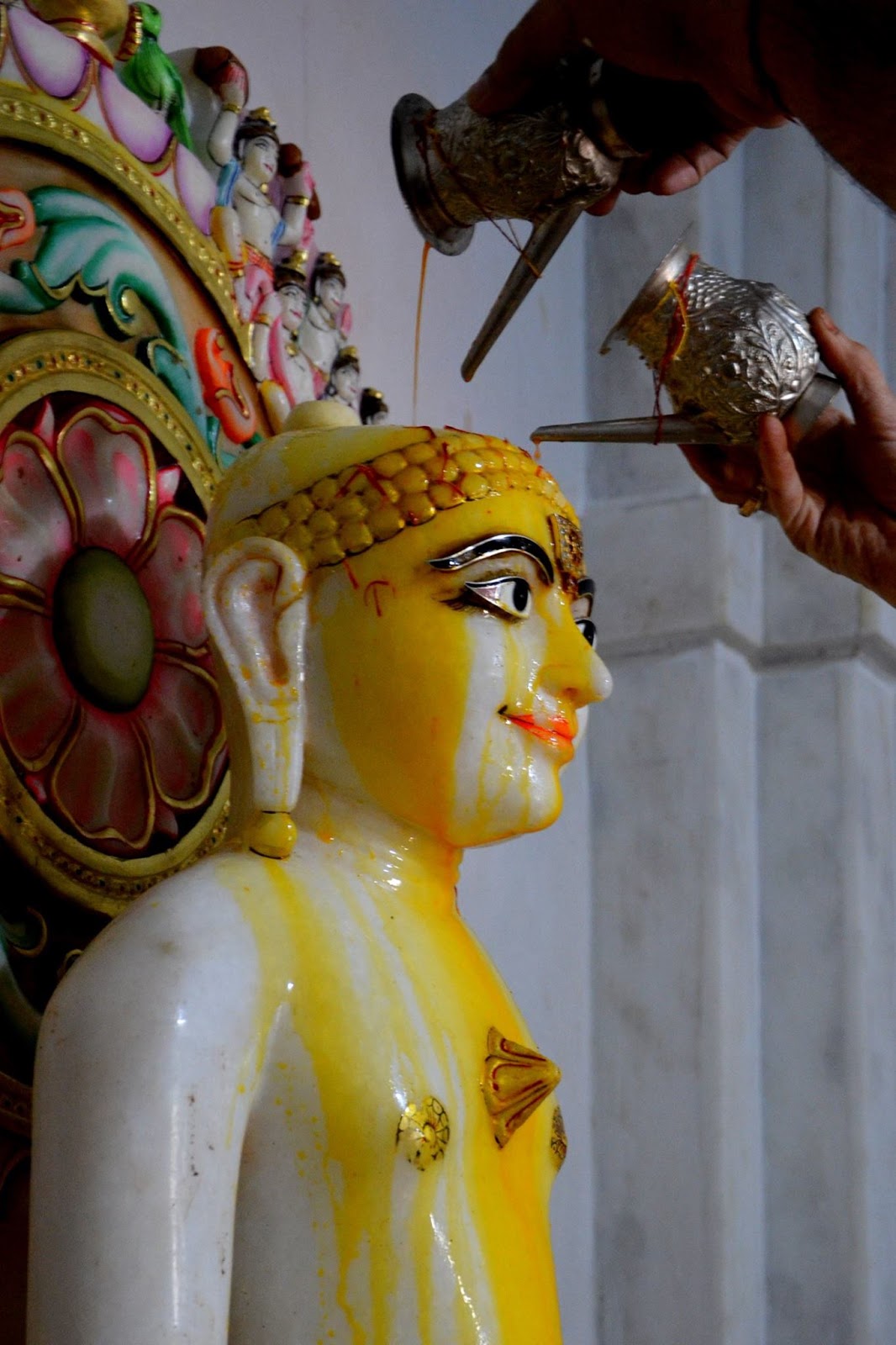
Honoured among the twenty-four with detailed accounts of his five auspicious kalyāṇaka events.
Numerous medieval and contemporary hymns invoke him as the Cool One, dispeller of inner heat.
Depicted in deep meditation, with the auspicious emblem of Svastika or Srivatsa at his chest.
Shitalanatha’s teaching is not a doctrine to be added to ourselves — it is a remembering of who we have always been.