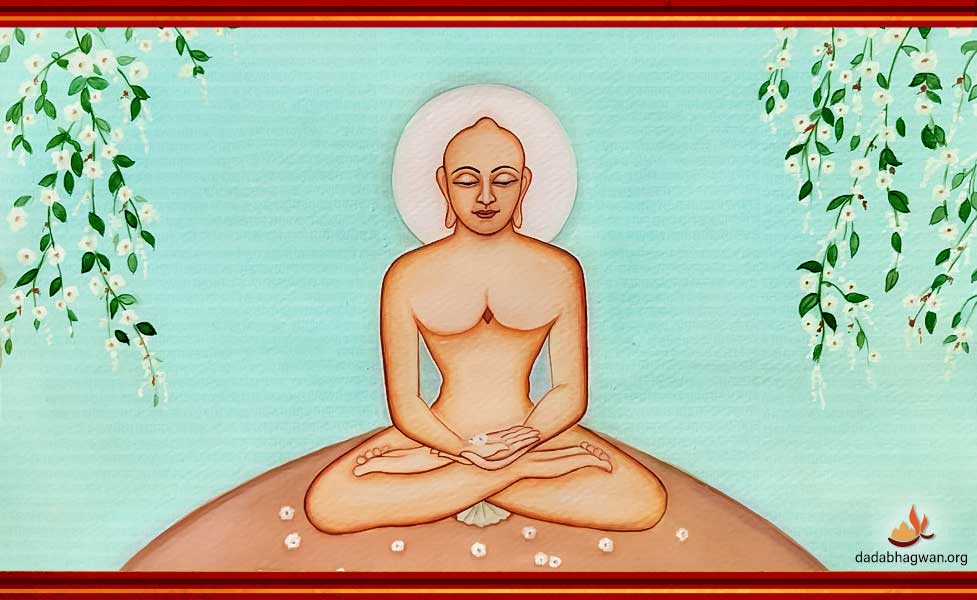
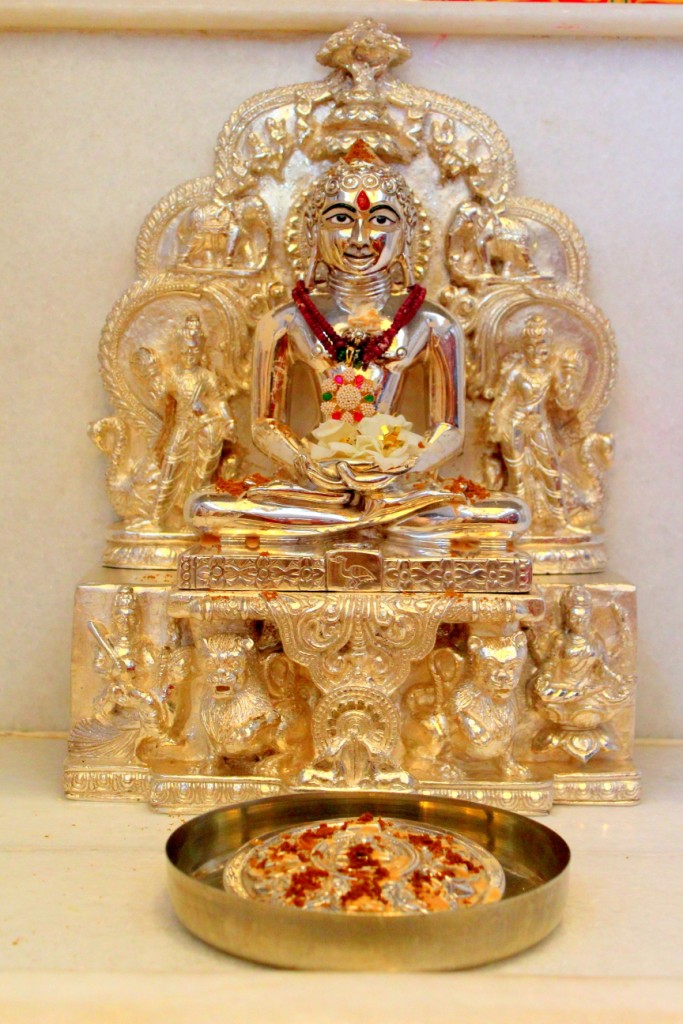
Sumatinatha Bhagwan portrait — life of the Fifth Tirthankara
Chapter I

The Life of Sumatinatha Bhagwan

From the gilded courts of Ayodhya to the silent peaks of liberation — a sovereign’s journey into the eternal.

A Sovereign Soul

The Fifth Ford-Maker of this Age

Born into the unbroken solar lineage of the Ikshvakus, Sumatinatha Bhagwan’s life is the story of a soul whose royal birth was only the prelude to its greater calling — the awakening of right wisdom in a world weary of confusion.

The Jain tradition remembers Sumatinatha Bhagwan as the fifth among the twenty-four Tirthankaras of the present descending half-cycle of time, the Avasarpini. Each Tirthankara is a soul who, having attained perfect knowledge and liberated the self entirely from the cycle of rebirth, builds for others a tirtha — a ford across the waters of worldly suffering. Sumatinatha is one such fordmaker, his very name meaning “the Lord of Right Understanding.”

His life unfolds across three luminous arcs: the royal childhood that prepared him for sovereignty, the renunciation that exchanged a throne for a forest, and the omniscient teaching that transformed silence into the highest sermon ever heard.

A Life in Five Movements

The Sacred Timeline

An immortal life seen through five defining moments — the Pancha Kalyanakas, the great auspicious events that mark every Tirthankara’s soul.

№ 01 · Chyavana Kalyanak

Descent of the Soul

The radiant soul of Sumatinatha descends into the womb of Queen Mangalavati. Auspicious dreams are seen by the queen, foretelling the birth of a sovereign-saint.

№ 02 · Janma Kalyanak

Birth in Ayodhya

On the eighth day of Vaisakha Sudi, in the holy city of Ayodhya, a prince is born to King Megha and Queen Mangalavati of the Ikshvaku dynasty. The heavens, it is said, themselves rejoice.

№ 03 · Diksha Kalyanak

The Great Renunciation

After ruling with extraordinary wisdom, the prince renounces the throne, the crown, and every comfort of the palace. He embraces the path of an ascetic — barefoot, possessionless, free.

№ 04 · Keval Gyan Kalyanak

Awakening of Omniscience

Beneath a tree of solitude, after long years of meditation and austerity, Sumatinatha attains Keval Gyan — perfect, all-pervading knowledge. The veil between knower and known dissolves.

№ 05 · Moksha Kalyanak

Liberation from the Cycle

His earthly mission complete, the Lord of Right Wisdom attains Nirvana on the sacred peak of Sammed Shikharji — eternally free, eternally luminous, eternally at rest.

Royal heritage of Sumatinatha Bhagwan — Ikshvaku dynasty
Royal Lineage

King Megha & Queen Mangalavati

The kingdom of Ayodhya — that ancient seat of dharma — was at the time ruled by King Megha (also remembered as Megharatha), a sovereign of the venerable Ikshvaku dynasty. By his side stood Queen Mangalavati (Sumangalavati), a woman of unusual grace, devotion and inner clarity.

It is told that during her time of expectancy, the queen was visited by a series of fourteen great auspicious dreams — a celestial annunciation that the soul she carried was no ordinary child, but a being destined to become a Tirthankara, a builder of sacred fords for all of humanity.

Their son, born into a royal household yet singularly drawn to the inner life, would grow to embody the highest qualities of the Ikshvaku line: clear judgement, righteous rule, and an unwavering compass of compassion.

The Meaning of His Name

Su · Mati · Natha

“Sumati” — right, wholesome, beautiful intelligence.
“Natha” — the lord, the protector, the master.

Together, the name Sumatinatha proclaims him the Lord of Right Wisdom — one whose very presence orients the seeker’s mind toward clarity, whose teaching is itself a form of cognitive sanctuary.

The Jain texts add a quiet and beloved legend behind this name: even before his birth, the queen — gifted by his presence in her womb — was said to resolve disputes in the court with such uncommon wisdom that the kingdom marvelled. The unborn soul, it was said, was already shedding light.

Sacred Sumatinatha idol at Matar — revered as Sacha Dev
The Renunciation

A Throne Exchanged for Truth

Long before his renunciation, the prince had already ruled as a king of remarkable poise. But sovereignty over land, he understood, is the smallest sovereignty of all. The great kingdom is the dominion of the self — over its passions, its prejudices and its fears.

Quietly, with the same composure that marked every royal decree, Sumatinatha set down the crown. He took the vow of diksha, the great initiation of the Jain ascetic, and walked away from the palace with nothing — no possessions, no attachments, no expectations. Only the path remained.

For long years he wandered, fasting, meditating, observing the most exacting austerities. He met every form of suffering — heat, cold, hunger, scorn — with the same equanimity. The body grew austere; the soul grew radiant.

Sumatinatha Bhagwan in meditation — symbol of Jain renunciation
The Twin Summits

Keval Gyan & Moksha

Two events stand at the apex of his earthly life — the moment knowledge became infinite, and the moment the soul was at last free.

№ Keval Gyan

The Awakening of Omniscience

After years of meditation in the forests of dharma, Sumatinatha Bhagwan attained Keval Gyan — the perfect, simultaneous, all-encompassing knowledge that beholds every soul, every substance, every moment of past, present and future without exception.

It is said that on this day all of nature paused. The deva and the deer, the wind and the water, knew that a soul had crossed into the boundless. From this moment onward, every word he spoke became scripture.

№ Moksha

Liberation upon Sammed Shikharji

Having illumined the path for countless seekers and established a sacred order, Sumatinatha Bhagwan entered his final meditation upon the holy peak of Sammed Shikharji — that mountain where so many Tirthankaras have stepped beyond the body.

There, free at last from karma in every form, he attained Moksha — perfect liberation. The soul that had borne the name Sumatinatha was henceforth a Siddha, eternally enlightened, eternally peaceful, beyond all return.

Janma Kalyanak

Vaisakha Sudi · Eighth Day

The birth anniversary of Sumatinatha Bhagwan is observed by Jain devotees worldwide on the eighth day of the bright half of Vaisakha. It is a day of devotion, fasting, scripture-recitation and quiet inward turning — a remembrance that wisdom, like the season itself, is something that returns when the soul is ready to receive it.

In temples across India and beyond, the day is marked with elaborate puja, devotional songs and the gentle ritual bathing of the Lord’s idol — a moment in which devotees symbolically cleanse their own minds of confusion and pledge their hearts to the path of right understanding.

Continue the journey

Step into the heart of Sumatinatha Bhagwan’s philosophy.